So you’ve got something worth selling — maybe it’s the jam everyone asks you to make more of, a garden that produces more than your family could ever eat, or a craft you’ve been perfecting for years. Selling at a Michigan farmers market is one of the most rewarding ways to turn that into real income. But the process of actually getting started can feel overwhelming if you don’t know where to begin.
This guide walks you through everything: what you’re allowed to sell, how to apply, what licenses you need, what to bring, and how to make your first market a success.
What Can You Sell at a Michigan Farmers Market?
Michigan farmers markets accept a wide range of vendors. Most markets fall into a few categories:
Agricultural products — fresh fruits and vegetables, herbs, flowers, plants, seedlings, honey, eggs, and meat. These are the most straightforward to sell and typically require the least paperwork.
Cottage food products — home-baked goods like bread, muffins, cookies, jams, jellies, and candy. Michigan has a Cottage Food Law that allows you to make and sell certain foods from your home kitchen without a licensed commercial kitchen — more on this below.
Value-added agricultural products — things like pickles, fermented vegetables, salsa, hot sauce, and flavored vinegars. These have more specific licensing requirements depending on how they’re made.
Craft and non-food vendors — handmade goods like candles, soap, jewelry, pottery, and art. Many markets reserve the majority of their spots for food vendors, so availability for craft vendors varies by market.
Michigan Cottage Food Law: What Home Bakers Need to Know
If you’re planning to sell baked goods or shelf-stable foods, Michigan’s Cottage Food Law is your starting point. As of 2017, Michigan significantly expanded what home-based food producers can sell directly to consumers.
Under the law, you can produce and sell “non-potentially hazardous” foods made in your home kitchen — meaning foods that don’t require refrigeration to be safe. This includes:
– Breads, muffins, cookies, cakes, and pastries
– Jams, jellies, and fruit butters (with proper water activity/pH levels)
– Candy and confections
– Roasted nuts and granola
– Dried herbs and spice blends
What’s not allowed under cottage food: anything that requires refrigeration, like cream pies, cheesecakes, meat products, or fermented/acidified foods. Those require a licensed commercial kitchen and food processing license.
Labeling requirements: All cottage food products must be labeled with your name and address, the product name, a list of ingredients, any allergen information, net weight, and the statement: *”Made in a home kitchen that is not inspected by the Michigan Department of Agriculture and Rural Development.”*
You do not need a license to sell cottage food directly to consumers at a farmers market. That’s one of the reasons the law is so popular with new vendors.
For full details, visit the Michigan Department of Agriculture and Rural Development (MDARD) website at michigan.gov/mdard.
Licenses and Permits You May Need
Beyond cottage food, the licenses you need depend on what you’re selling.
Food License from MDARD — Required if you’re selling meat, poultry, dairy products, fermented foods, acidified products (like salsa or pickles), or anything made in a commercial kitchen. Apply through MDARD’s MiDEAL licensing system.
Food Handler Certification — Some markets require a ServSafe or equivalent food handler certificate even for cottage food vendors. It’s worth getting regardless — it’s inexpensive, takes a few hours, and makes you more credible to market managers.
Business Entity / Sales Tax — If you’re selling taxable goods in Michigan, you’re required to register with the Michigan Department of Treasury and collect sales tax. Most food products are exempt, but crafts, candles, soaps, and similar items are not. Register for a sales tax license at michigan.gov/taxes — it’s free.
EBT/SNAP Authorization — If you want to accept Bridge Cards (Michigan’s SNAP/EBT program), you’ll need to apply through the USDA’s SNAP Retailer application. Many Michigan markets also participate in the Double Up Food Bucks program, which matches SNAP dollars spent on Michigan-grown fruits and vegetables. Contact your market manager about this.
Liability Insurance — Not always legally required, but many markets ask vendors to carry it. A basic general liability policy through a company like NEXT Insurance or a farm bureau can run $200–$500 per year and is worth it for peace of mind.
How to Apply to a Michigan Farmers Market
Every market has its own application process, but the general steps are similar:
1. Research markets in your area. Consider size, customer demographics, day of week, season length, and vendor fees. A large Saturday market in a busy downtown will have more competition and higher fees but more foot traffic. A smaller Tuesday market might be easier to get into and help you build experience.
2. Check the market’s vendor page. Most established markets have an online application, usually opening in late winter (January–March) for the upcoming season. Look for deadlines — popular markets like Fulton Street in Grand Rapids or Eastern Market in Detroit often fill up fast.
3. Prepare your application. You’ll typically need to provide:
– A description of what you plan to sell
– Proof of any applicable licenses or certifications
– Photos of your products and/or booth setup
– Your proposed pricing
– Certificate of insurance (if required)
4. Be specific about your products. Market managers want to know exactly what you’ll be selling. A vague answer like “baked goods” is less compelling than “sourdough bread, cinnamon rolls, and seasonal fruit galettes made with Michigan-grown fruit.”
5. Follow up. If you don’t hear back within a few weeks of a deadline, a polite follow-up email is completely appropriate.
Can’t get into your first choice? Ask to be put on a waitlist. Vendors drop out every season. You can also look for newer or less-established markets that may have more open slots — and less competition.
Setting Up Your Booth: What You Need
Your booth setup doesn’t have to be expensive to look professional, but it does need to be functional and tidy. Here’s what most vendors start with:
The basics:
– A 10×10 canopy tent (most markets require this size)
– Two or three 6-foot folding tables
– A tablecloth in a consistent color or pattern — neutral colors like cream, kraft brown, or forest green tend to photograph well and don’t distract from your products
– Signage with your business name, clearly readable from 10–15 feet away
– A cash box and change (start with at least $100 in small bills)
– A card reader — Square and PayPal Here are the most popular options and work with a basic smartphone
For food vendors:
– Appropriate food-safe containers, clamshells, or packaging
– A way to keep things cool if needed (a good cooler or chilled display)
– Gloves and hand sanitizer
– Labels on every product with required information
For produce vendors:
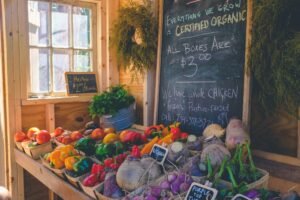
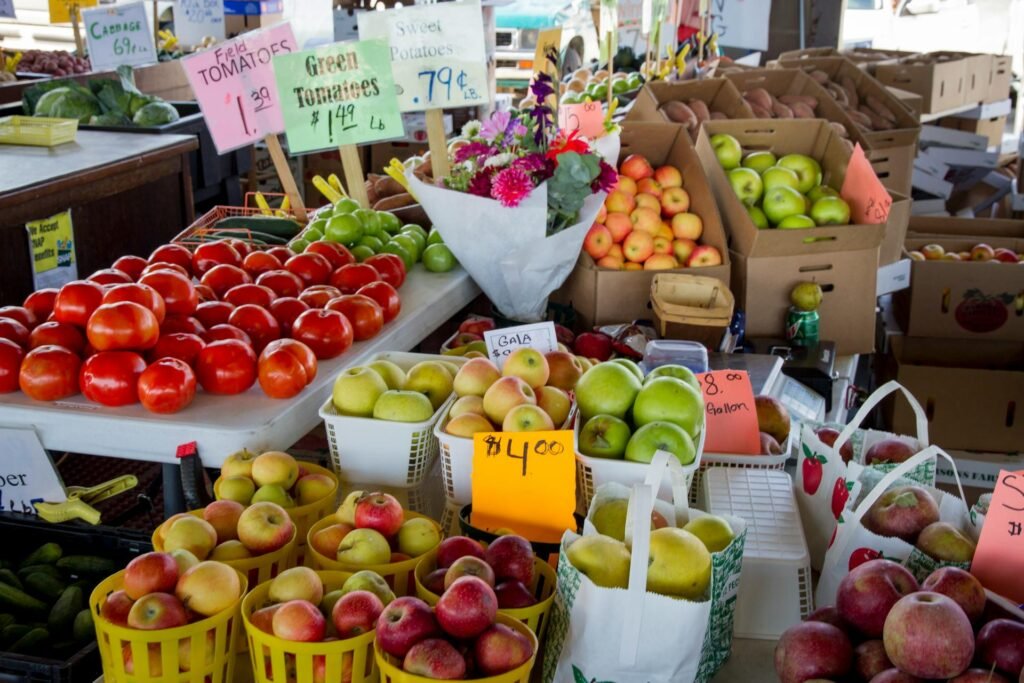
– Tiered display stands or wooden crates to add height and visual interest
– Chalkboard signs for pricing — they’re reusable and look great
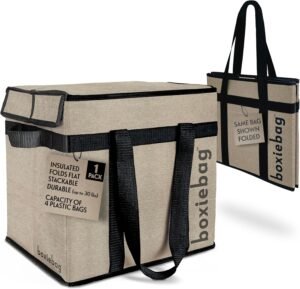
– Paper bags or biodegradable bags for customers
Nice to have: A simple banner, a tablecloth that goes to the floor (so you can store things underneath), a pop-up side wall for wind/sun, and a battery-powered Bluetooth speaker if your market allows it.
Pricing Your Products
Pricing is one of the trickiest parts of starting out. Two common mistakes: pricing too low (undervaluing your work and making it hard to cover your costs) and pricing too high without the brand recognition to justify it yet.
A useful framework:
– Calculate your true costs — ingredients, packaging, your time at market, table fees, and any licensing or equipment costs
– Research comparable products at other local markets and farms
– Price for the customer you want, not the one you’re afraid of losing
Farmers market customers generally expect to pay more than grocery store prices — and most are willing to, because they’re buying direct from the maker. Don’t apologize for your prices. Know your value and be able to talk about what makes your product worth it.
Your First Market Day: Tips for a Smooth Start
– Arrive early. Most markets ask vendors to be set up 30–60 minutes before opening. Give yourself extra time your first day — setup always takes longer than you expect.
– Bring more product than you think you need. Running out early on your first day is a missed opportunity. You can always take things home.
– Talk to your customers. The personal connection is what farmers markets are all about. People want to know your story — where you’re from, how you grow or make things, what’s special about what you’re selling.
– Take notes. After your first few markets, you’ll have a much better sense of what sells, what doesn’t, what price points feel right, and which days or locations work best for you.
– Connect with other vendors. The farmers market vendor community is generally generous and collaborative. The person in the next booth has been doing this longer than you and probably has good advice.
Michigan Resources for New Vendors
– Michigan Department of Agriculture and Rural Development (MDARD): michigan.gov/mdard — licenses, cottage food info, and food safety resources
– Michigan Farmers Market Association (MIFMA): mifma.org — training, resources, and a directory of Michigan markets
– MSU Extension: extension.msu.edu — business planning help, food safety certification, and local food resources
– Double Up Food Bucks: doubleupfoodbucks.org — information on the SNAP-matching program
Selling at a farmers market takes more preparation than most people expect the first time — and more reward than most people expect too. Start small, show up consistently, and don’t be discouraged if the first few markets are slow. Building a loyal customer base takes time, but at a farmers market, once you have it, you really have it.
Have a market you’d like to be listed on FarmFreshMichigan.com? Browse our directory to find markets near you, or submit a market to add one we’re missing.